
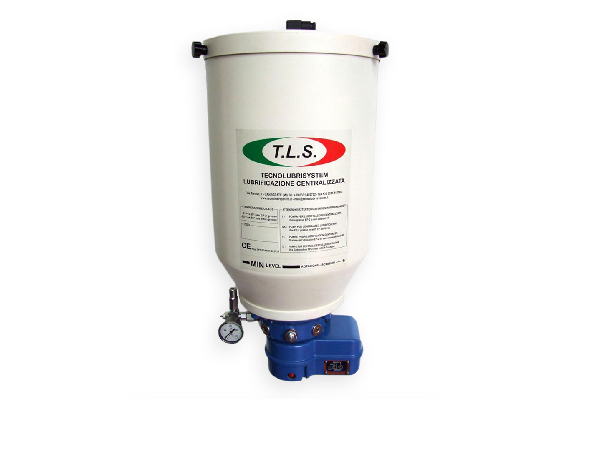
Choosing an automatic greasing pump based on machinery requirements
Choosing an automatic greasing pump requires a careful assessment of the machinery’s characteristics and the conditions in which it will operate. The pump is a fundamental component of a centralized lubrication system, as it supplies the circuit and allows lubricant to reach the various greasing points. The number of points to be served, operating cycles, required pressure, and grease characteristics can all influence the choice, making it essential to identify a solution that meets the actual requirements of the application.
Every system has specific requirements that must be considered from the design stage. TLS Tecno Lubri System addresses these needs by developing automated lubrication systems configured according to the operating characteristics of the machinery. When choosing an automatic greasing pump, it is therefore important to assess not only the performance of the individual component but also how it integrates into the entire circuit. The right choice ensures consistent lubricant distribution, helps limit component wear, and promotes greater reliability throughout production cycles.
Choosing an automatic greasing pump by assessing application characteristics
When choosing an automatic greasing pump, the first step is to analyze the machinery’s operating conditions. A system designed for continuous operation may have different requirements from a machine used intermittently, just as a system with numerous lubrication points requires different considerations from a simpler application. The selection process must therefore begin with the characteristics of the production process, even before evaluating pump performance.
The main factors to consider include:
- Number and location of lubrication points: influence circuit configuration and how grease is distributed.
- Operating cycles and frequency of use: determine lubrication requirements in relation to machinery operating times.
- Loads and mechanical stresses: affect the operating conditions of components subject to friction.
- Environmental conditions: temperatures, dust, humidity, and contaminants may require specific characteristics.
- Component accessibility: difficult-to-reach points make an automatic greasing system particularly useful.
These factors help define the application’s requirements and provide the basis for subsequent system sizing. Choosing an automatic greasing pump without considering these variables could compromise the consistency of lubricant distribution. A thorough preliminary assessment makes it possible to identify a suitable configuration that supports component protection and more efficient industrial maintenance management.
Choosing an automatic greasing pump based on flow rate, pressure, and lubricant
When choosing an automatic greasing pump, it is essential to evaluate certain technical parameters that determine the system’s ability to distribute grease correctly. Among these, flow rate and operating pressure are particularly important, as they must be compatible with the circuit’s characteristics and the requirements of the lubrication points.
The pump’s flow rate indicates the quantity of lubricant delivered over a given period or operating cycle. It must be sufficient to meet the system’s overall requirements, while also considering the scheduled greasing frequency. Operating pressure, on the other hand, must allow grease to reach the connected points by overcoming resistance within the piping and distribution devices. Higher pressure is not necessarily an advantage: what matters is compatibility with the system.
Lubricant characteristics also influence the choice. Grease consistency, pumpability, and behavior at different temperatures can affect the circuit’s supply conditions. It is therefore essential to verify that the pump is suitable for the lubricant being used.
Choosing an automatic greasing pump means finding the right balance between technical performance and application requirements. Accurate sizing promotes consistent lubricant dosing, reduces waste, and helps maintain efficient lubrication of industrial machinery over time.
Choosing an automatic greasing pump according to the lubrication system
When choosing an automatic greasing pump, evaluating the performance of the individual component is not enough: its compatibility with the entire lubrication system must also be verified. The pump must supply a circuit in which piping, distributors, and metering devices work together to ensure that grease reaches the intended lubrication points correctly.
The configuration of the centralized lubrication system directly influences the characteristics required of the pump. In progressive systems, for example, lubricant delivery must be compatible with the sequential operation of the distributors, while other configurations may require different supply and control methods.
To identify a suitable solution, it is important to verify:
- Type of lubrication system: determines how grease is distributed to the various points.
- Compatibility with distributors and metering devices: ensures that the lubricant supply meets the requirements of the installed devices.
- Piping length and configuration: affect the resistance that the pump must overcome.
- Control and monitoring methods: must be consistent with the scheduled lubrication cycles.
Choosing an automatic greasing pump therefore requires a comprehensive assessment of the circuit so that every component contributes to the system’s correct operation. A properly matched configuration ensures consistent lubricant distribution, reduces the risk of malfunctions, and supports machinery reliability over time.
Choosing an automatic greasing pump with TLS Tecno Lubri System
Choosing an automatic greasing pump means identifying a component that meets the machinery’s requirements and can be properly integrated into the entire lubrication circuit. For this reason, the selection should not be based solely on the pump’s technical specifications, but should begin with a comprehensive assessment of the application and its operating conditions.
TLS Tecno Lubri System applies its expertise in the design and manufacture of automated lubrication systems to meet these requirements. Analyzing lubrication points, operating cycles, and grease characteristics makes it possible to define a suitable configuration in which the pump, distributors, metering devices, and piping all contribute to the system’s correct operation. Particular attention is paid to sizing so that flow rate and pressure meet the system’s actual requirements.
Working with a specialized company such as TLS Tecno Lubri System allows you to approach the selection process while also considering maintenance requirements and operational continuity. A correctly configured system can ensure more consistent lubricant distribution, reduce manual intervention, and help protect components subject to wear.
Choosing an automatic greasing pump through a targeted design approach therefore means investing in the reliability of the entire system, with a solution designed to support your production requirements over time.
Click here to contact our team!
FAQs about choosing an automatic greasing pump
How do you choose an automatic greasing pump based on the machinery?
When choosing an automatic greasing pump, it is necessary to assess the number of lubrication points, operating cycles, environmental conditions, and lubricant characteristics. The pump must also be compatible with the circuit configuration and the machinery’s operating requirements.
What characteristics should an automatic greasing pump have?
An automatic greasing pump must provide a flow rate and pressure suited to the application, be compatible with the grease being used, and integrate correctly with the distribution devices. Its power supply, control, and monitoring methods must also meet the system’s requirements.
How is the required flow rate of a lubrication pump determined?
The flow rate is determined by considering the total quantity of lubricant required by the connected points and the frequency of greasing cycles. Sizing must also account for the characteristics of the distribution system so that the pump can supply the circuit correctly.
Why is operating pressure important when choosing a pump?
Operating pressure must be sufficient to overcome resistance within the piping and distribution devices. Inadequate pressure can compromise lubricant delivery to the lubrication points, while pressure levels that exceed the system’s requirements do not necessarily provide additional benefits.
What types of lubricant can be used in automatic greasing pumps?
Compatibility depends on the pump’s characteristics and the lubricant’s consistency. It is necessary to check the grease’s NLGI grade, pumpability, and behavior at operating temperatures, while following the manufacturer’s technical specifications.
How does the number of lubrication points influence pump selection?
The number of points helps determine the system’s overall lubricant requirements and configuration. However, selecting the right pump also requires considering the quantities needed at each point, delivery frequency, and circuit characteristics.
What is the relationship between the pump and distributors in a centralized lubrication system?
The pump supplies the circuit, while the distributors distribute lubricant to the connected points. In progressive systems, distributors meter grease through a defined operating sequence. Compatibility between these components is essential to ensure consistent distribution.
Why is it important to size an automatic greasing pump correctly?
Correct sizing ensures that lubricant requirements are met without selecting a pump with insufficient or unnecessarily high performance. It also helps reduce the risk of malfunctions, protect components, and improve the reliability of the automated lubrication system.
How does TLS Tecno Lubri System support the selection of an automatic greasing pump?
TLS Tecno Lubri System designs and manufactures automated lubrication systems according to application requirements. Analyzing machinery characteristics, lubrication points, and operating conditions makes it possible to identify a configuration in which the pump is correctly integrated with the other system components.